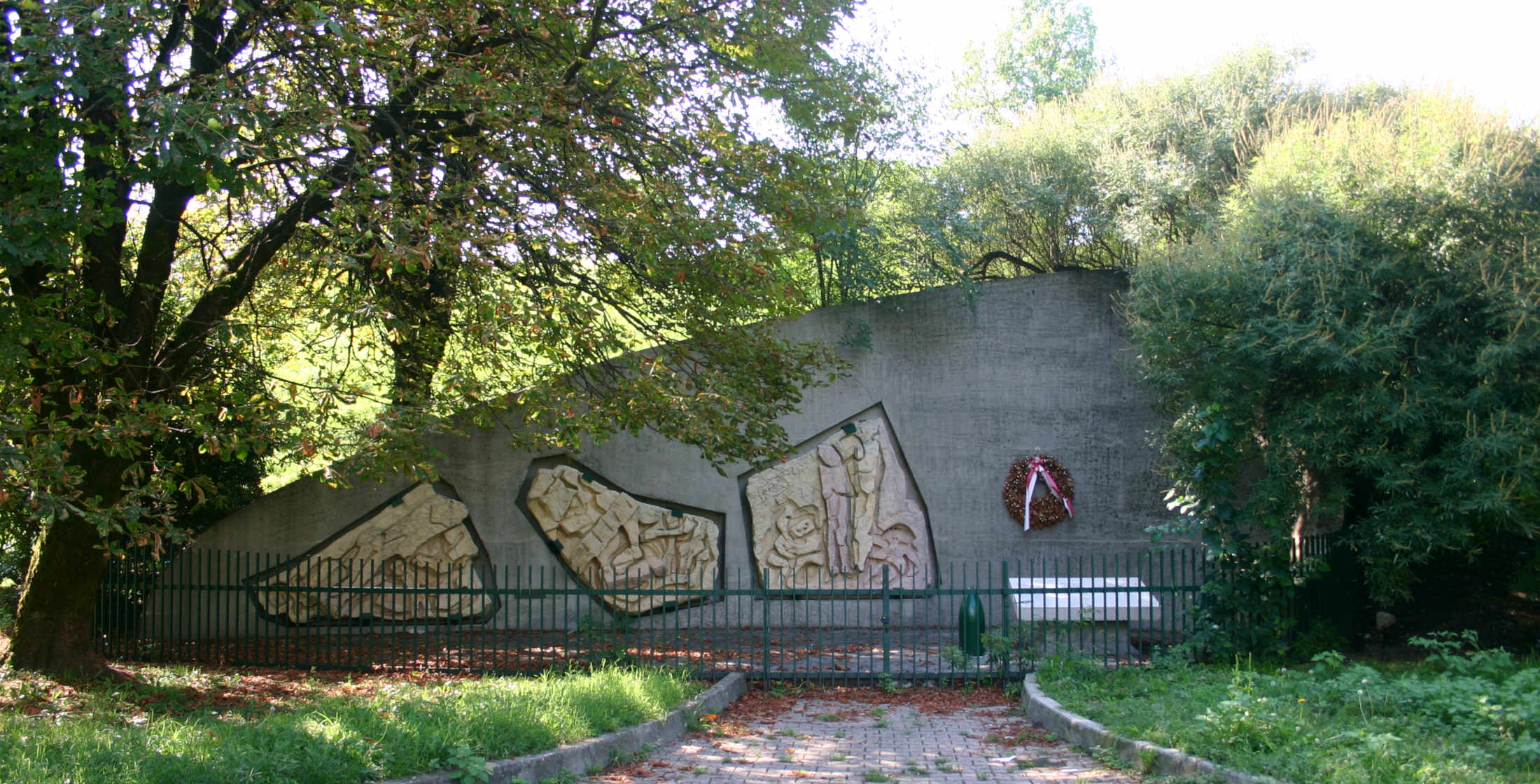
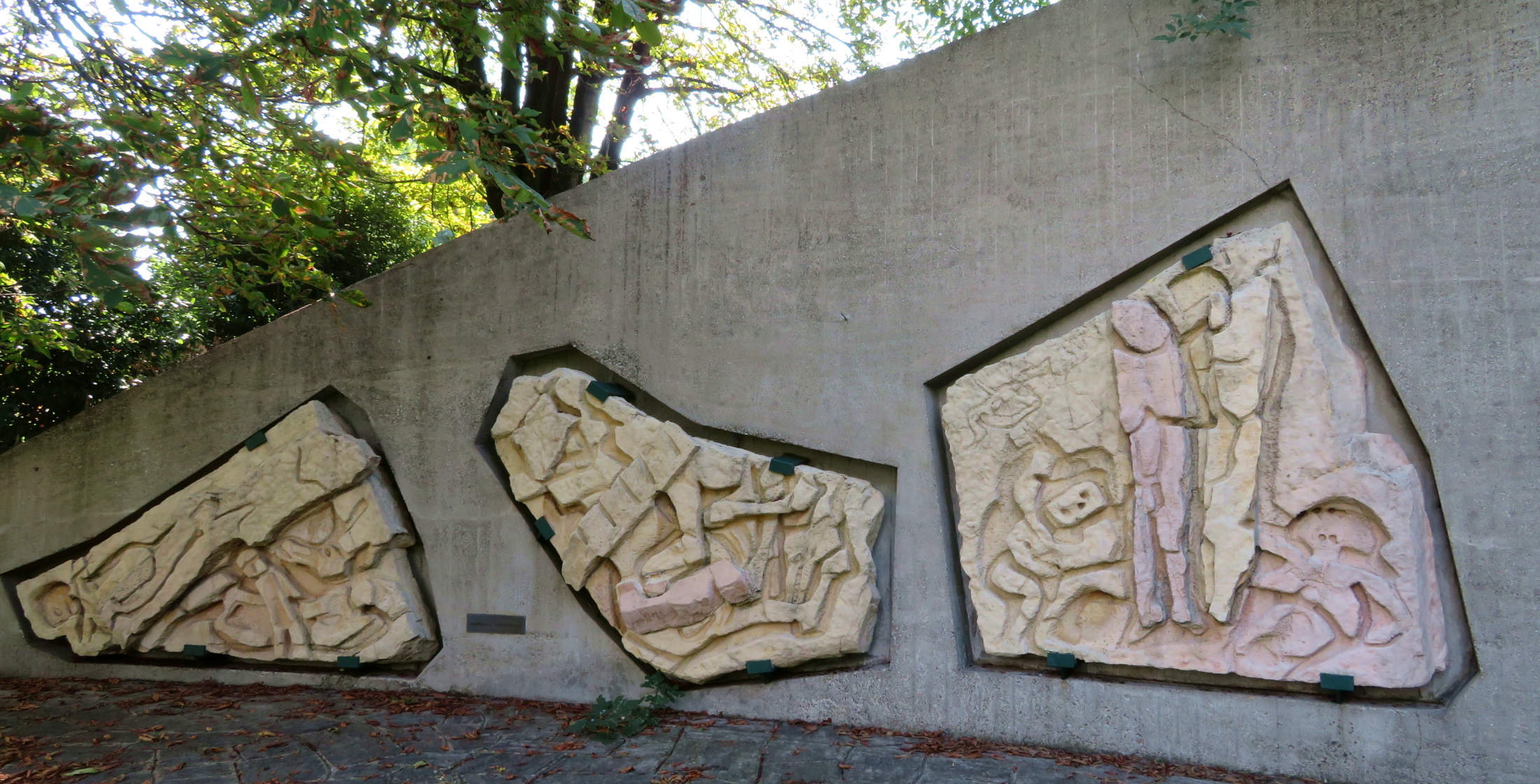
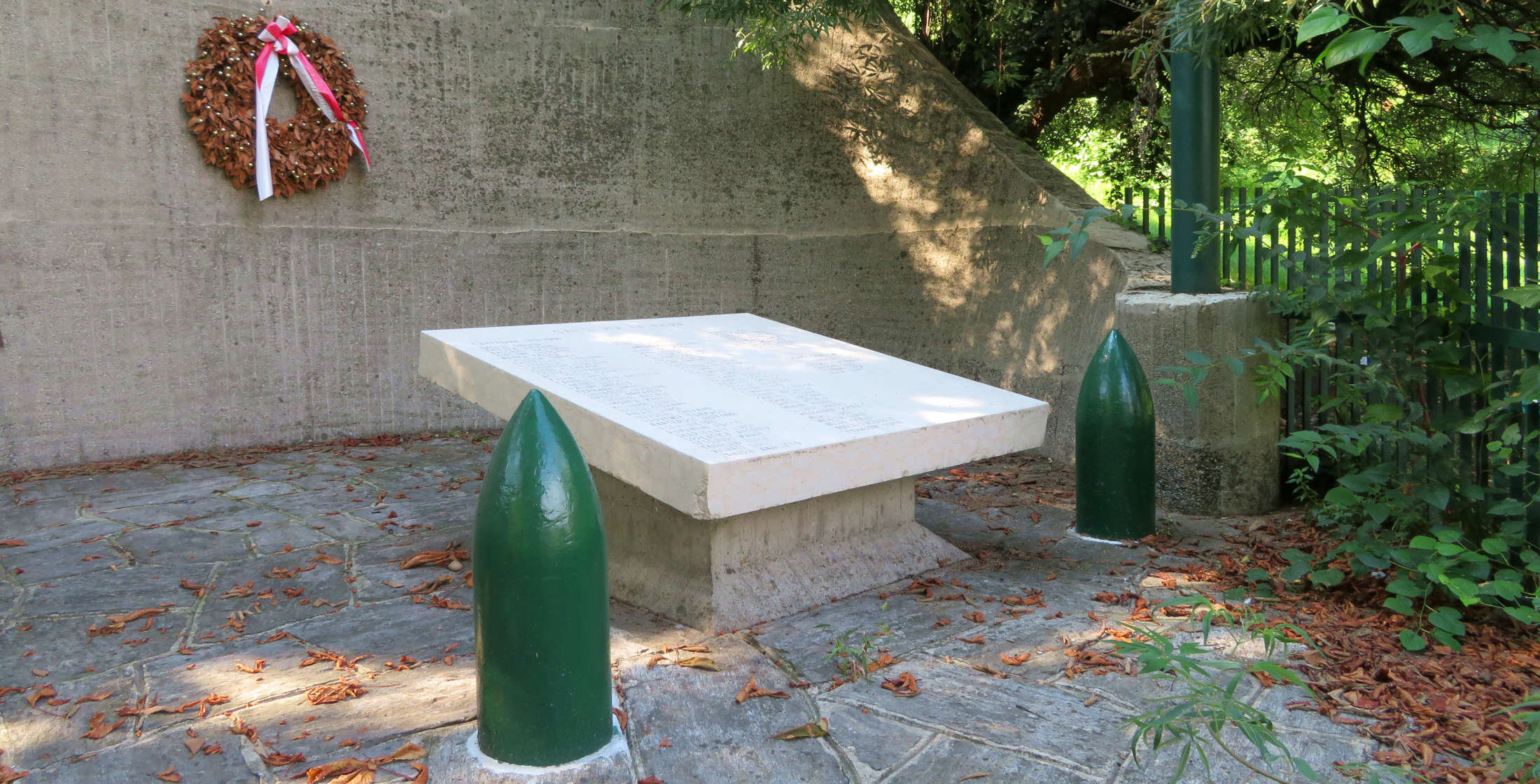
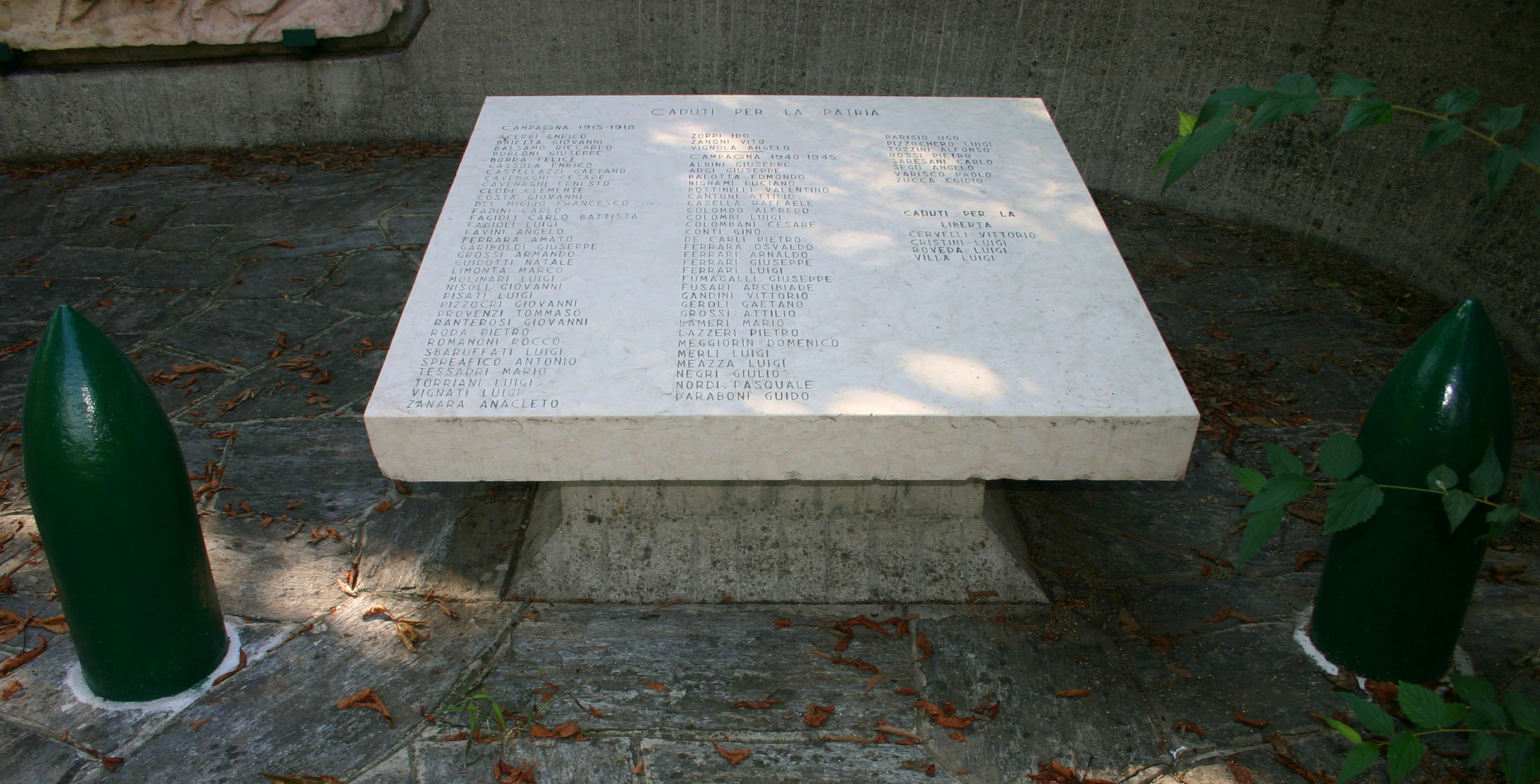
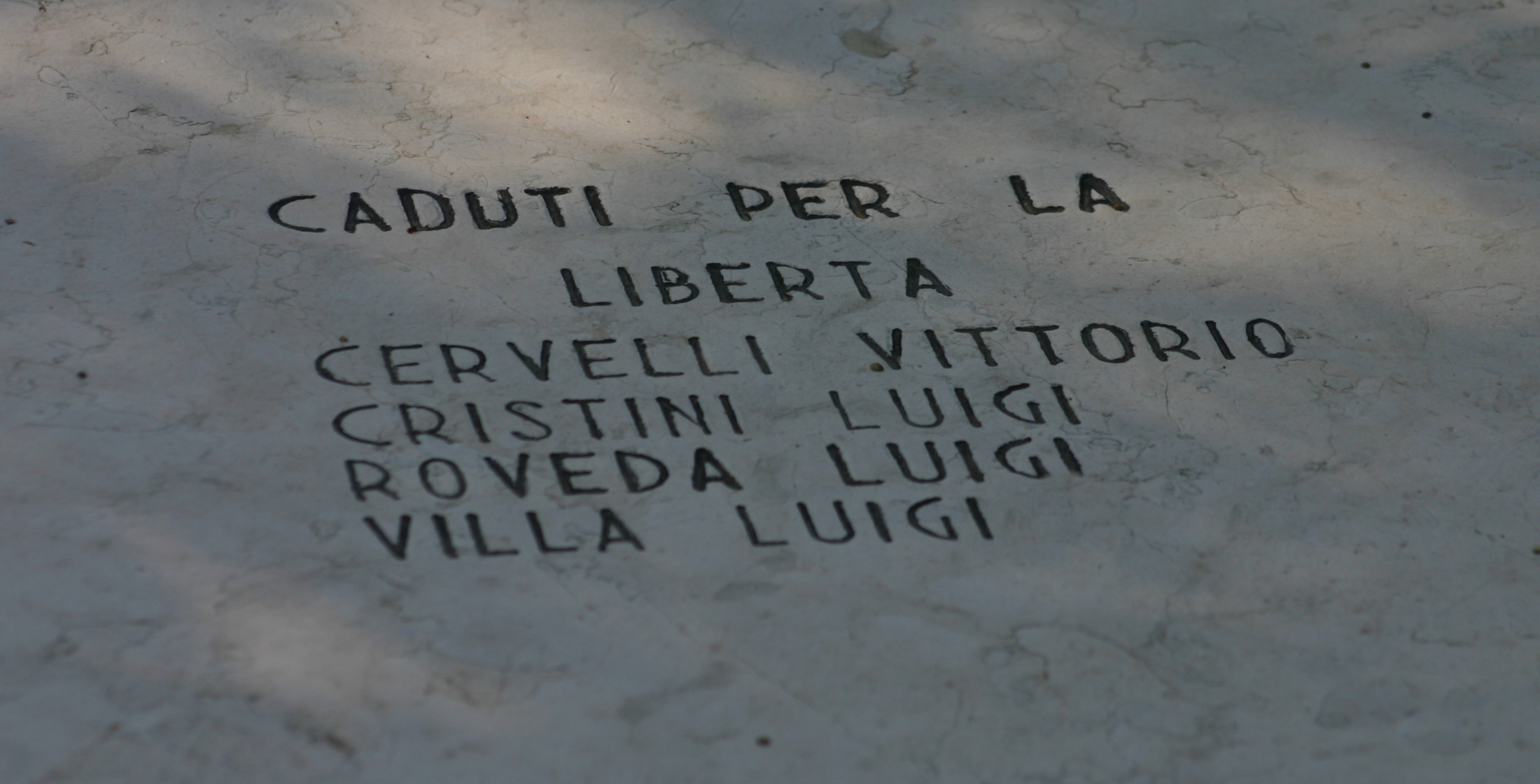
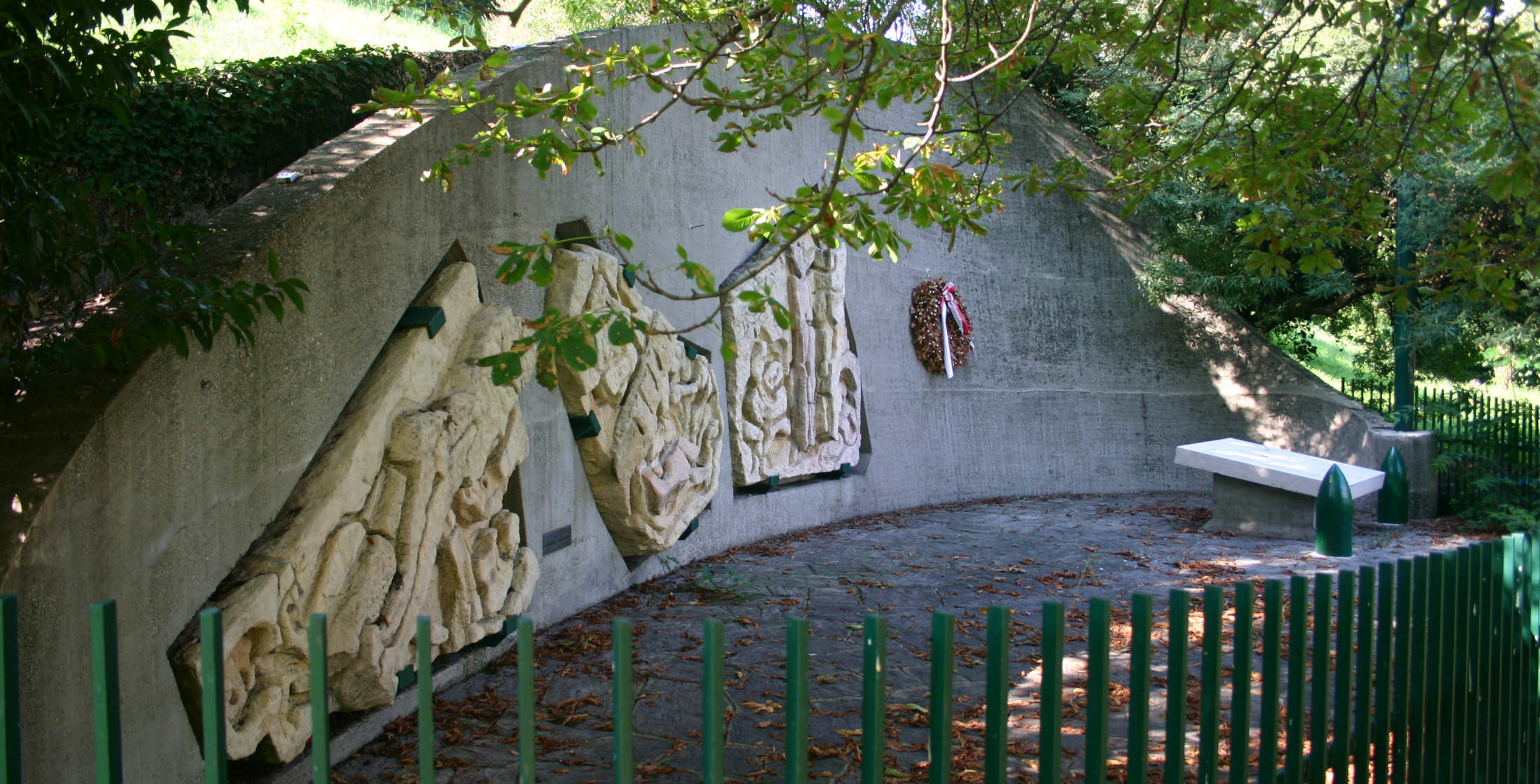
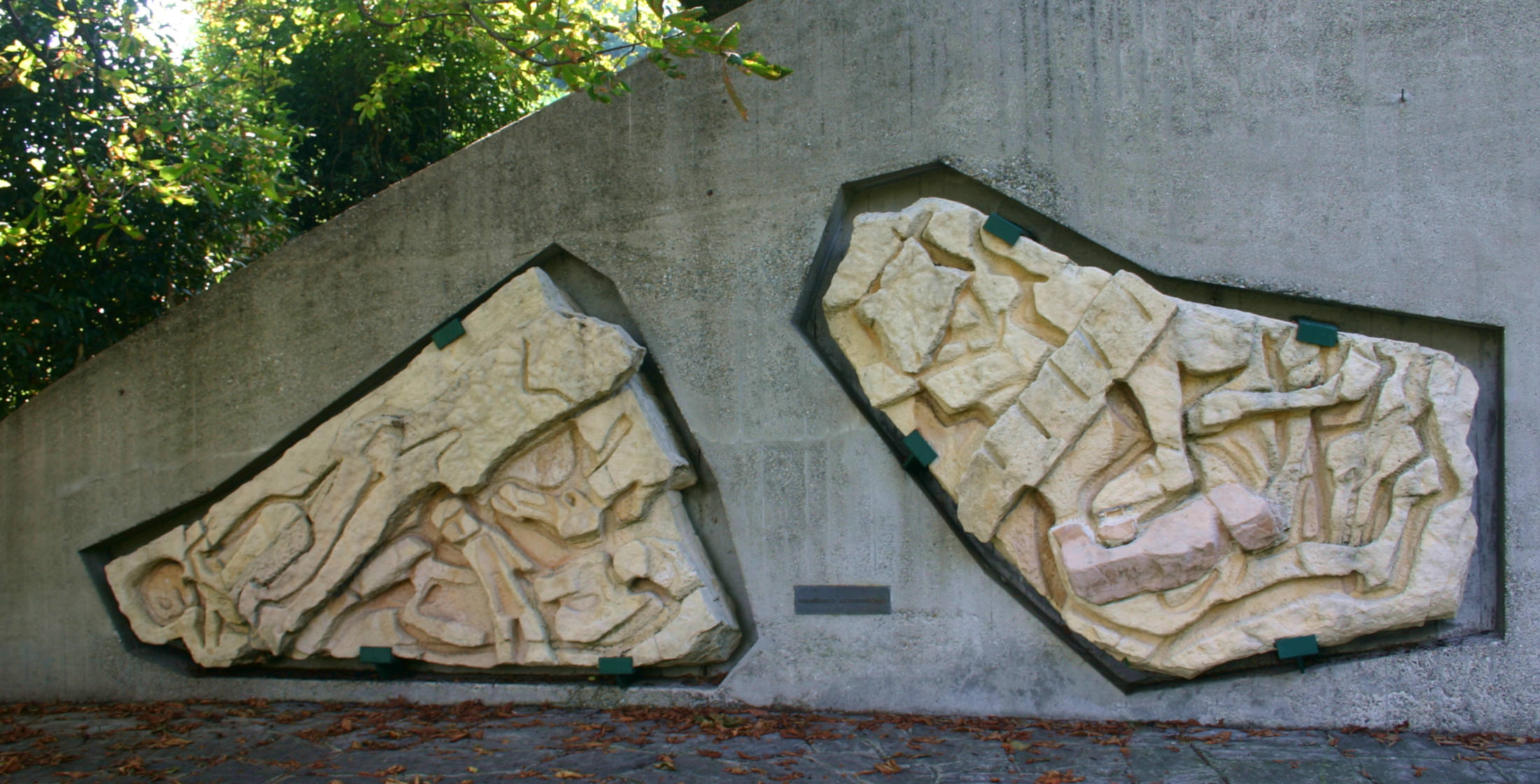
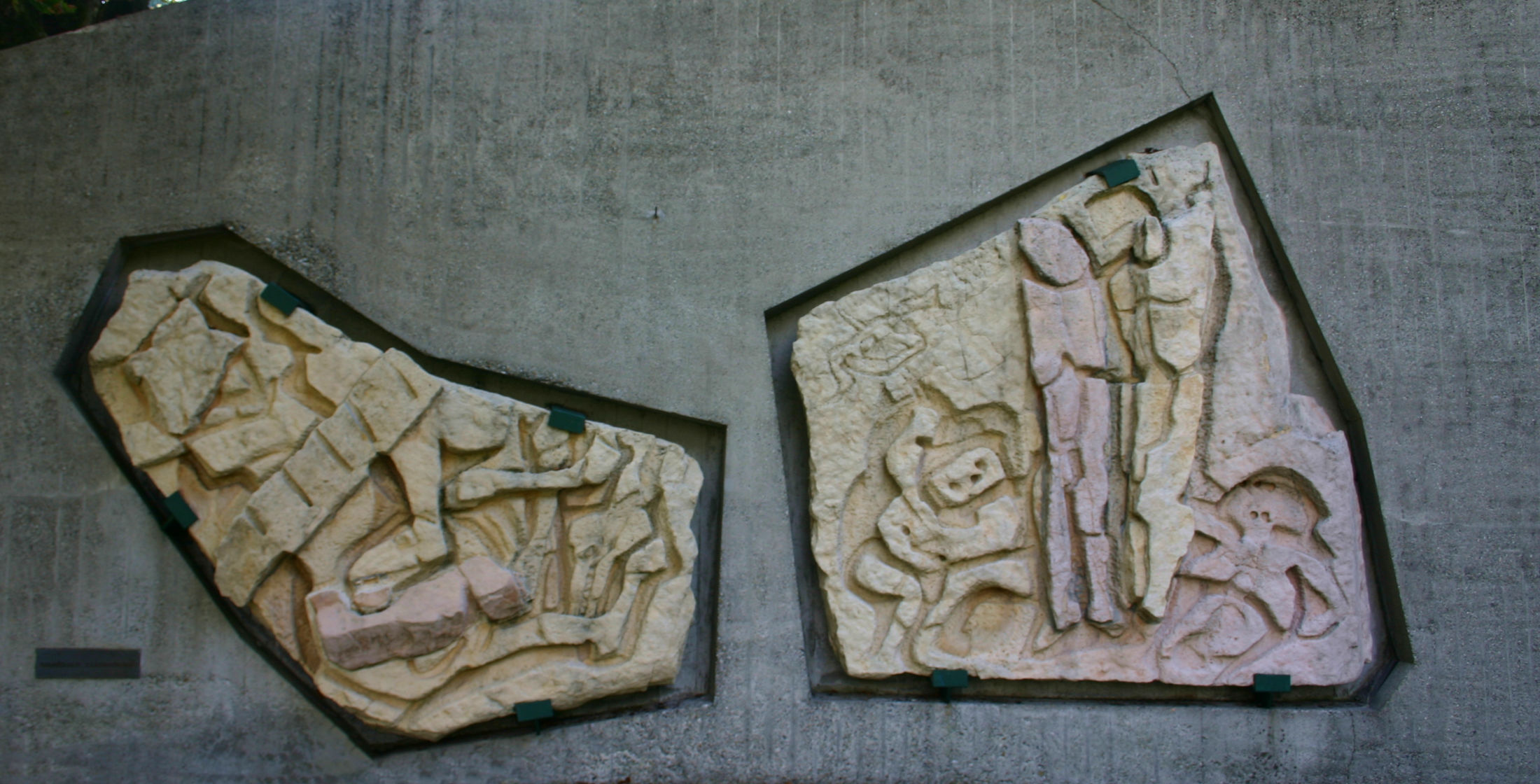
Above: Giancarlo Sangregorio, ‘Monument to the Fallen of Rogoredo’, 1959-60, photos by Anna Riboldi.
Inside the commemorative monument, also known as the Monument to the Resistance, the sculptural work by Giancarlo Sangregorio consists of three imposing blocks of Angera stone.
Derived from waste material from an abandoned quarry and sculpted through deep cuts, graffito engravings, and highlighted shadowed recesses, the three high-relief slabs are configured as shards of a broken table. The forms of the rock evoke a prehistoric dimension, in which anthropomorphic and zoomorphic figures emerge from the raw material. As Sangregorio himself stated, the sculptural action of his composition consists in the act of “invading the interior of the structure with space itself.” The outcome was described by Marco Valsecchi as a visual cataclysm of “giants in conflict, horses, and marine figures.”
The reception of the work at the time of its presentation was at the center of a lively critical debate.
Art historian Raffaele Monti emphasized its full adherence to the avant-garde language and its proximity to works belonging to the Informal movement.
In contrast, his colleague Raffaele De Grada firmly claimed its continuity with the classical tradition and the Realism movement.
According to this latter perspective, the tension of the stones maintained a strong figurative and ethical legibility.
Due to a general strike on Friday, October 30, 2026, regular opening hours for the Permanent Collection may not be guaranteed. The exhibitions will close at 7:30pm in any case (last admission 6:30pm).
The exhibitions Matisse. The world in a room and Deutsche Bank Artist of the Year – Charmaine Poh will remain open as scheduled.