Stadera Cura – ‘Un nome in ogni quartiere’ (neighborhood mural)
Author: A m’l rum da me
Title: Stadera Cura – ‘Un nome in ogni quartiere’ (neighborhood mural)
Date: 2022
Location: Via Giorgio Savoia, 2
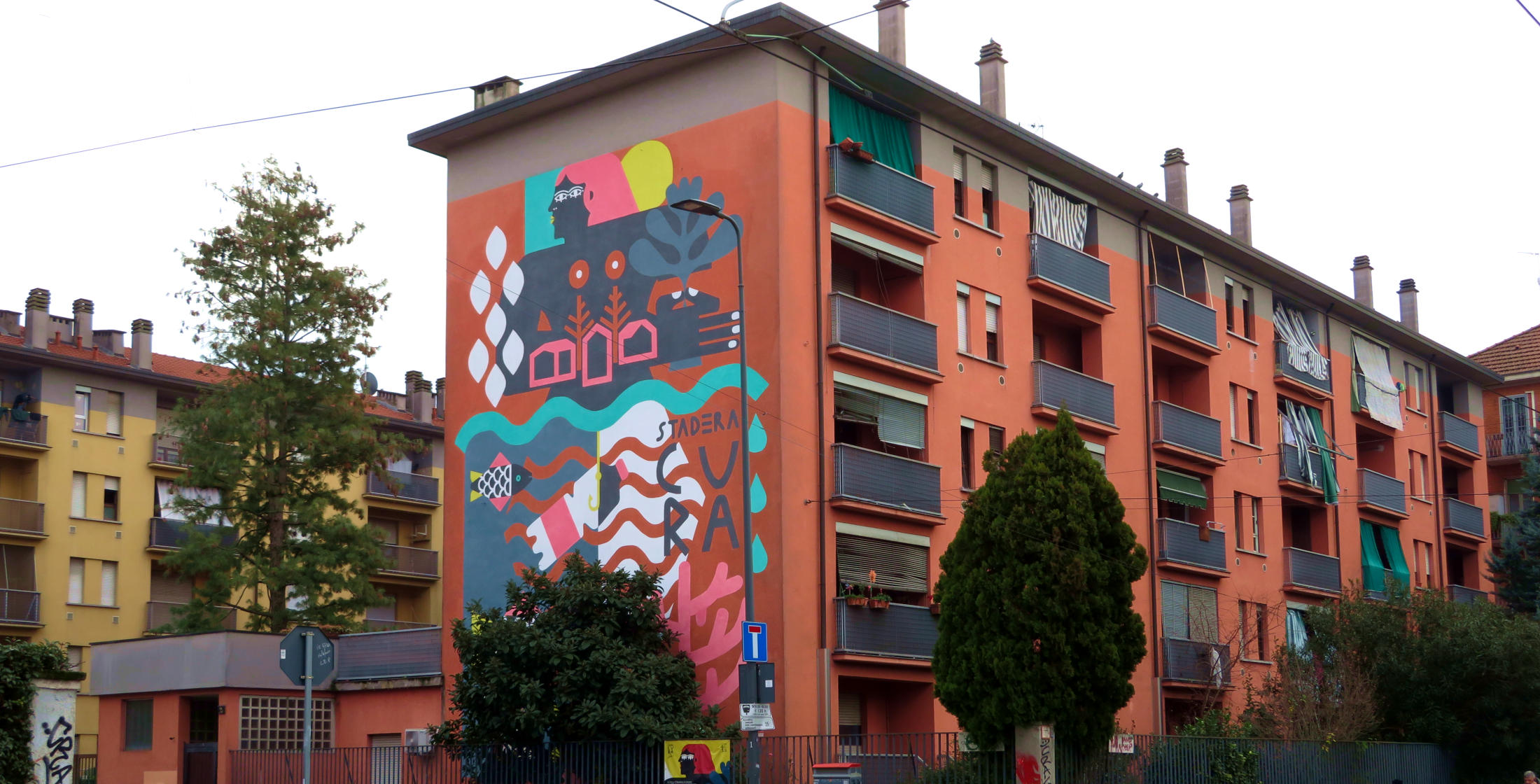
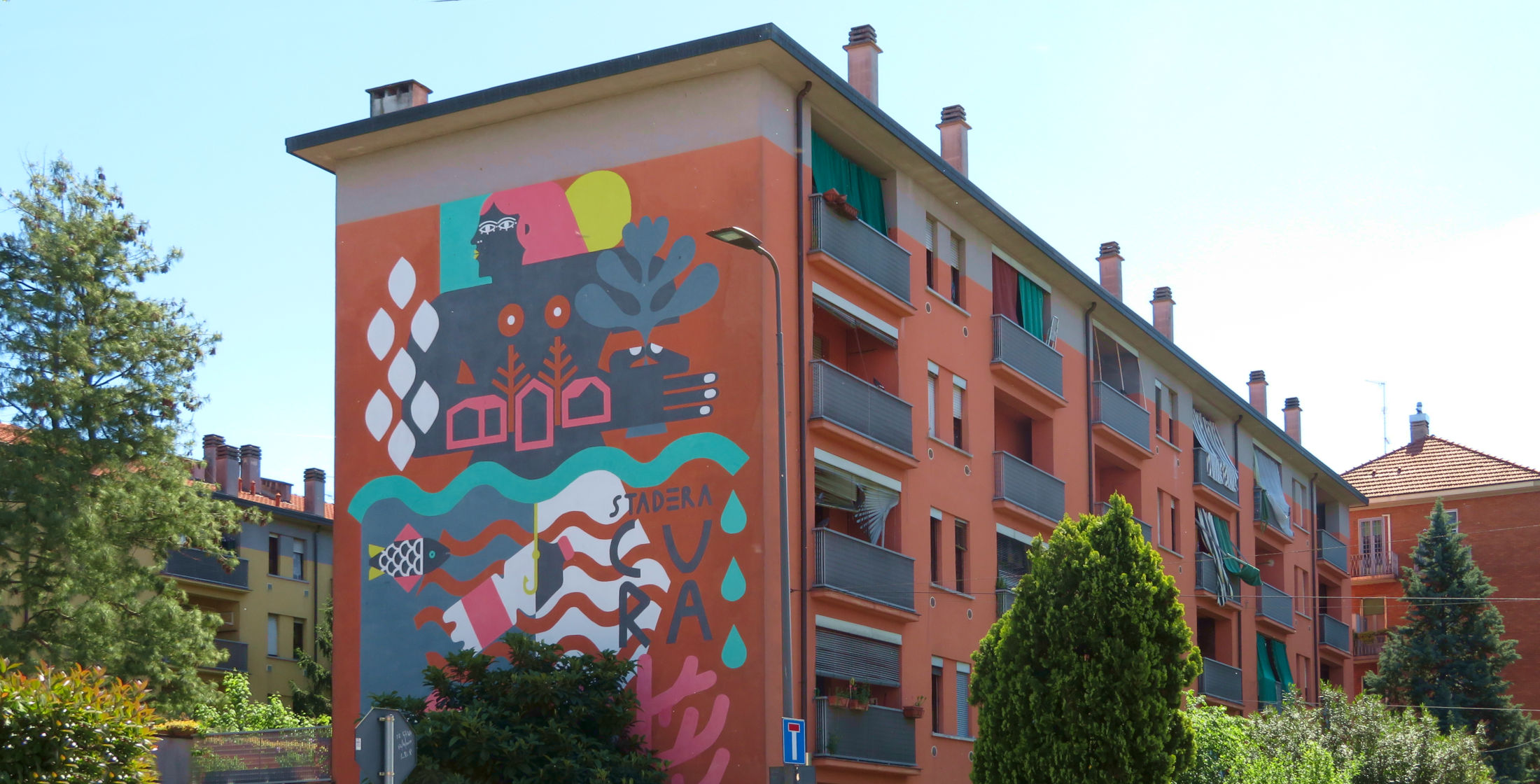
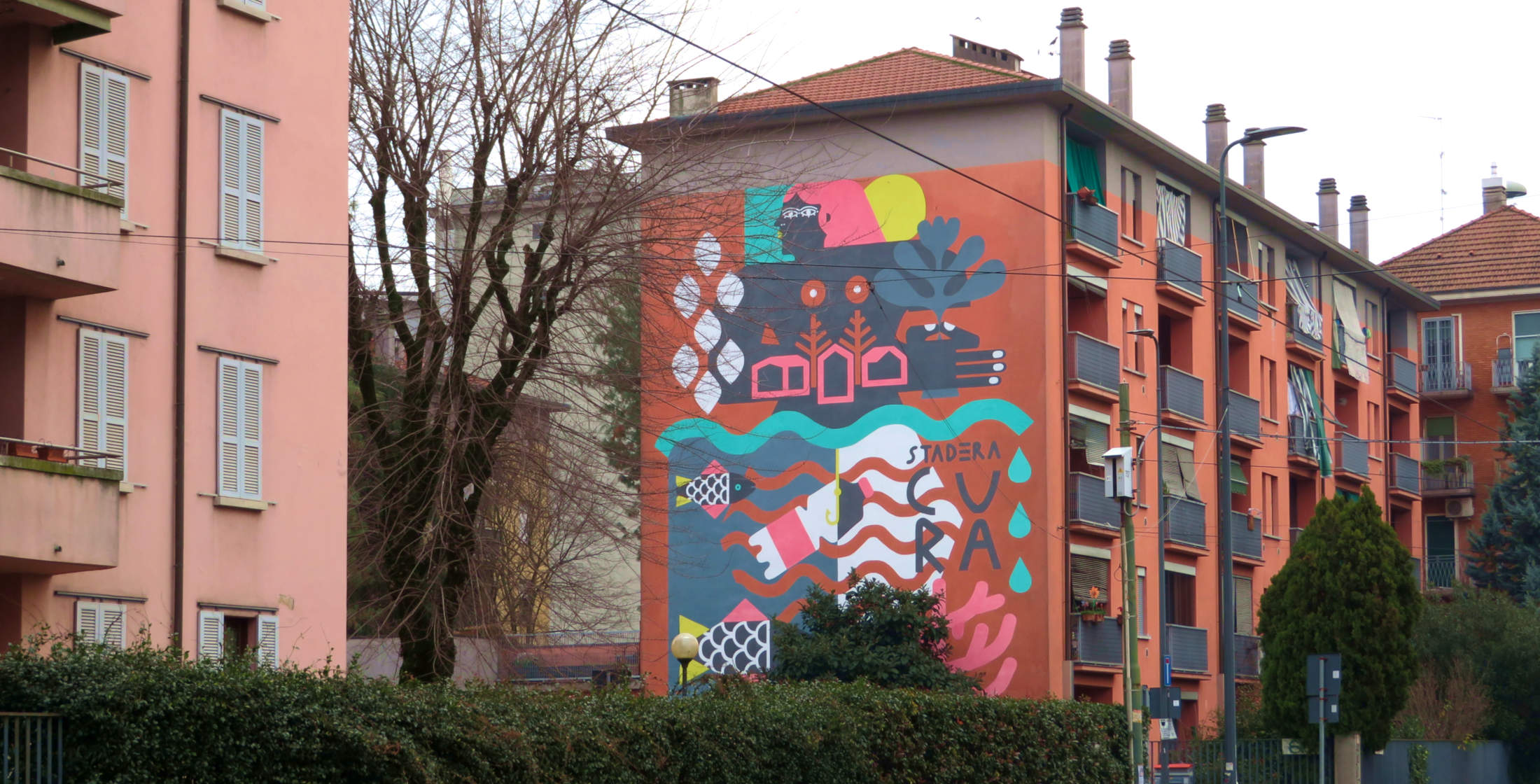
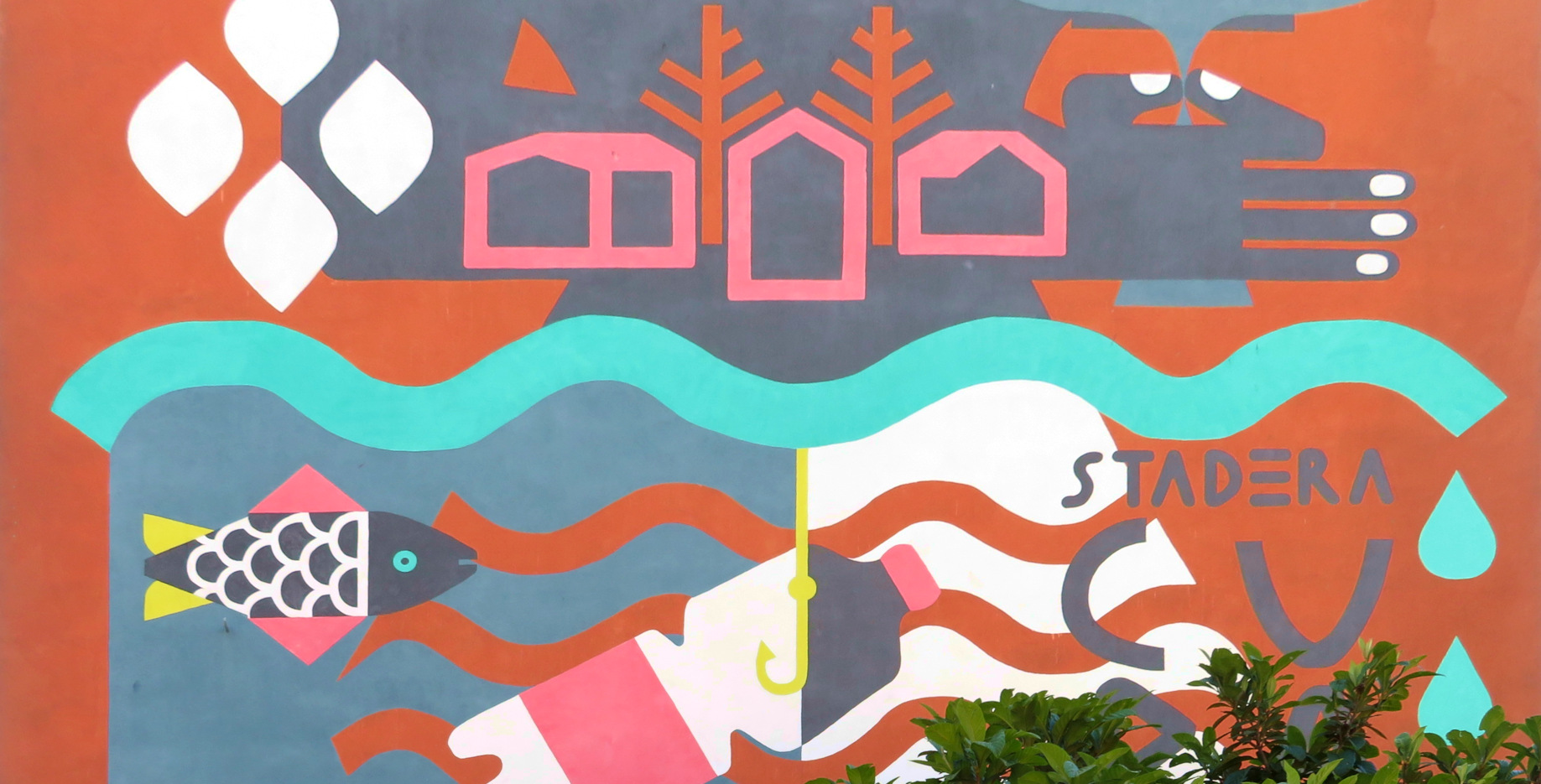
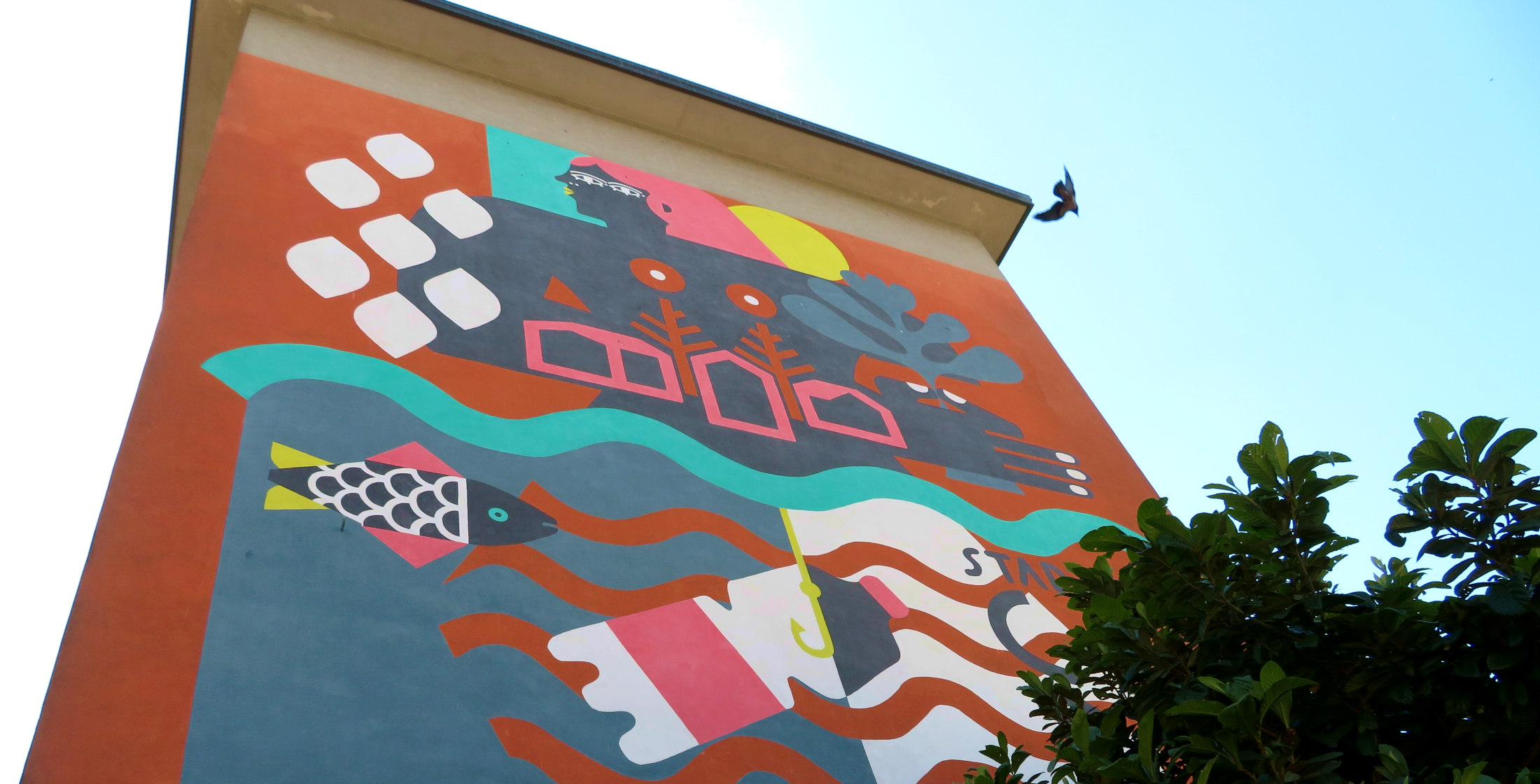
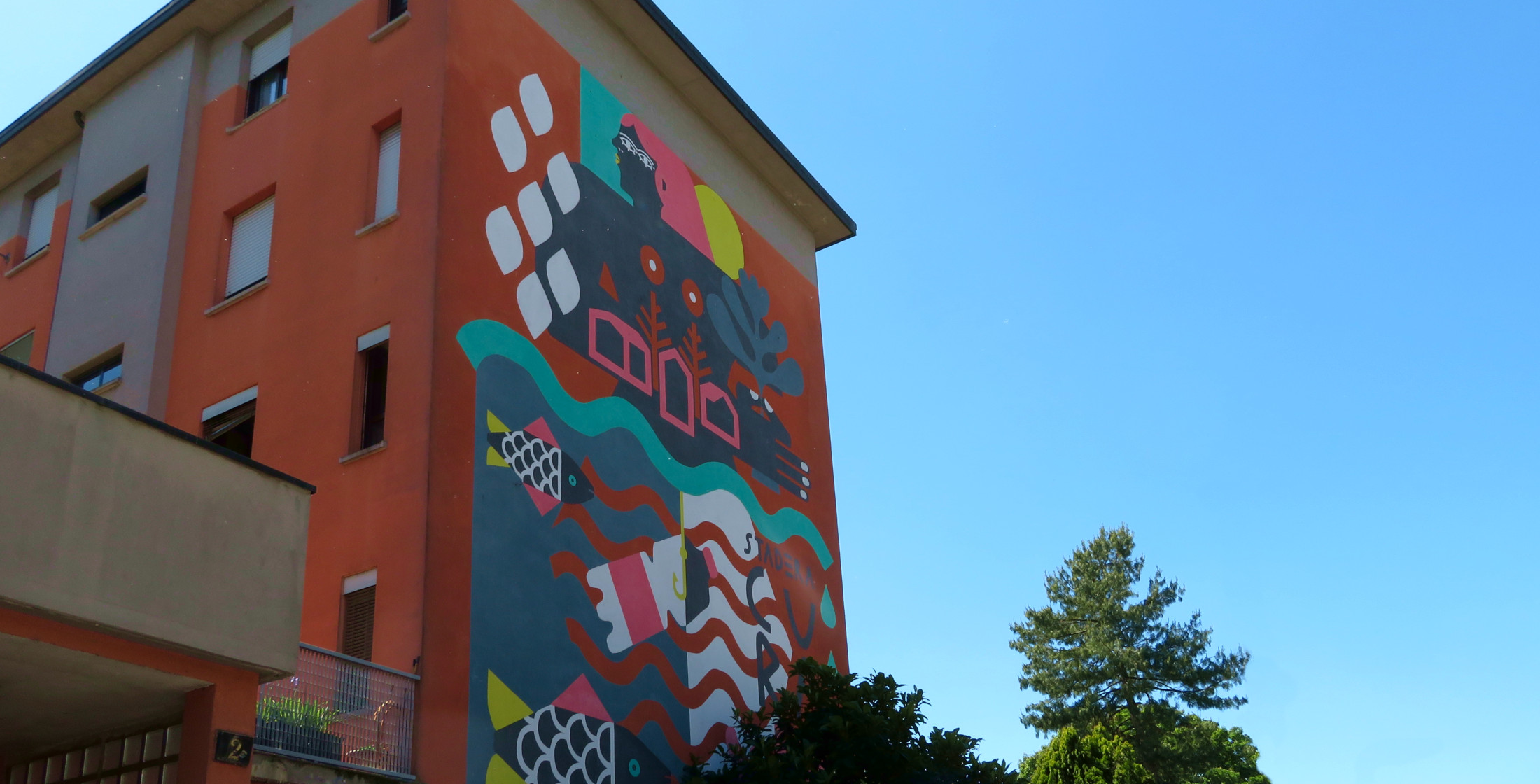
Above: A m’l rum da me, ‘Stadera Cura’, 2022, photos by Anna Riboldi.
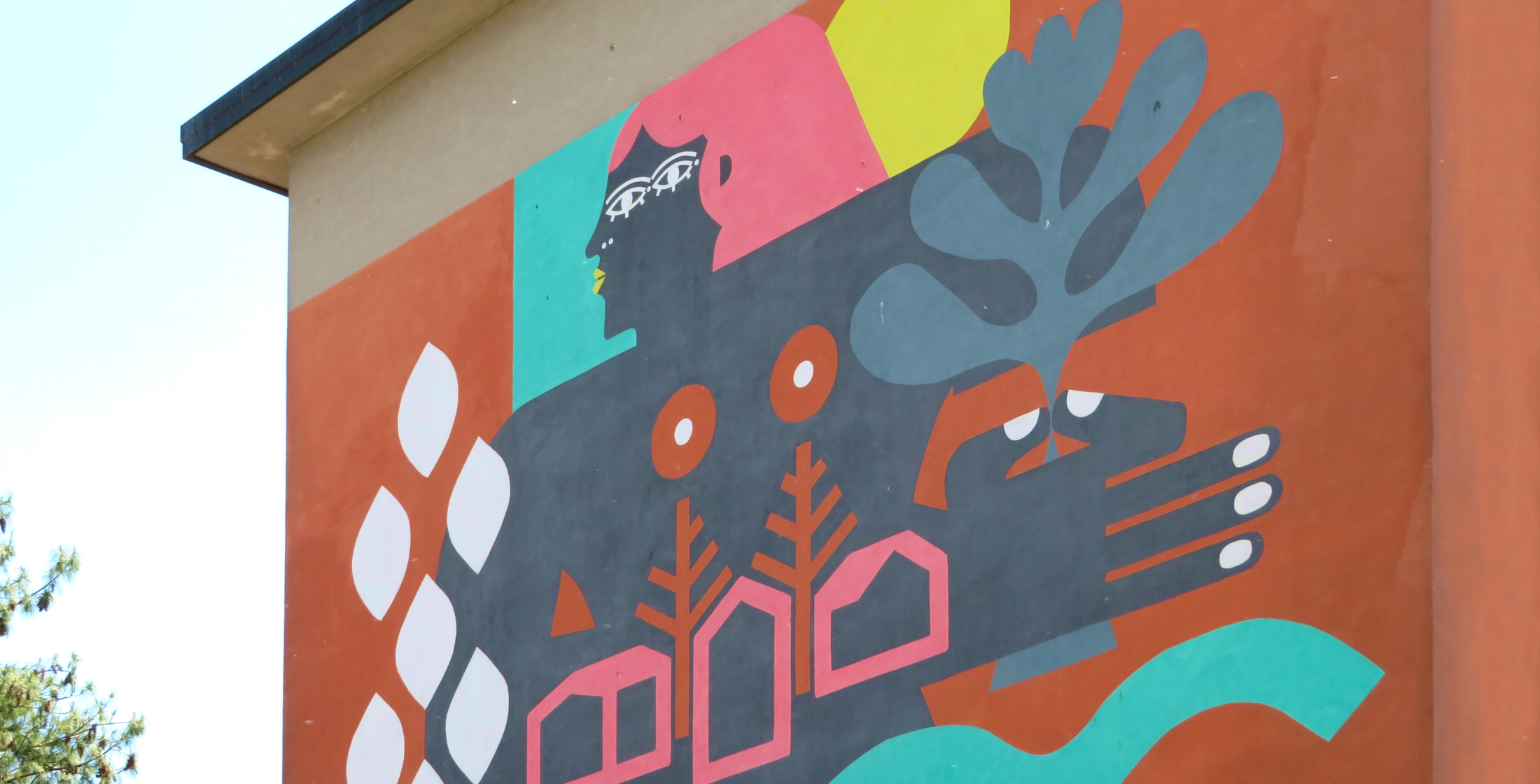
From the waves of the sea emerges a stylized and imposing female figure who watches over the houses and natural elements: she is the goddess Cura, around whom life on earth and beneath the seas revolves.
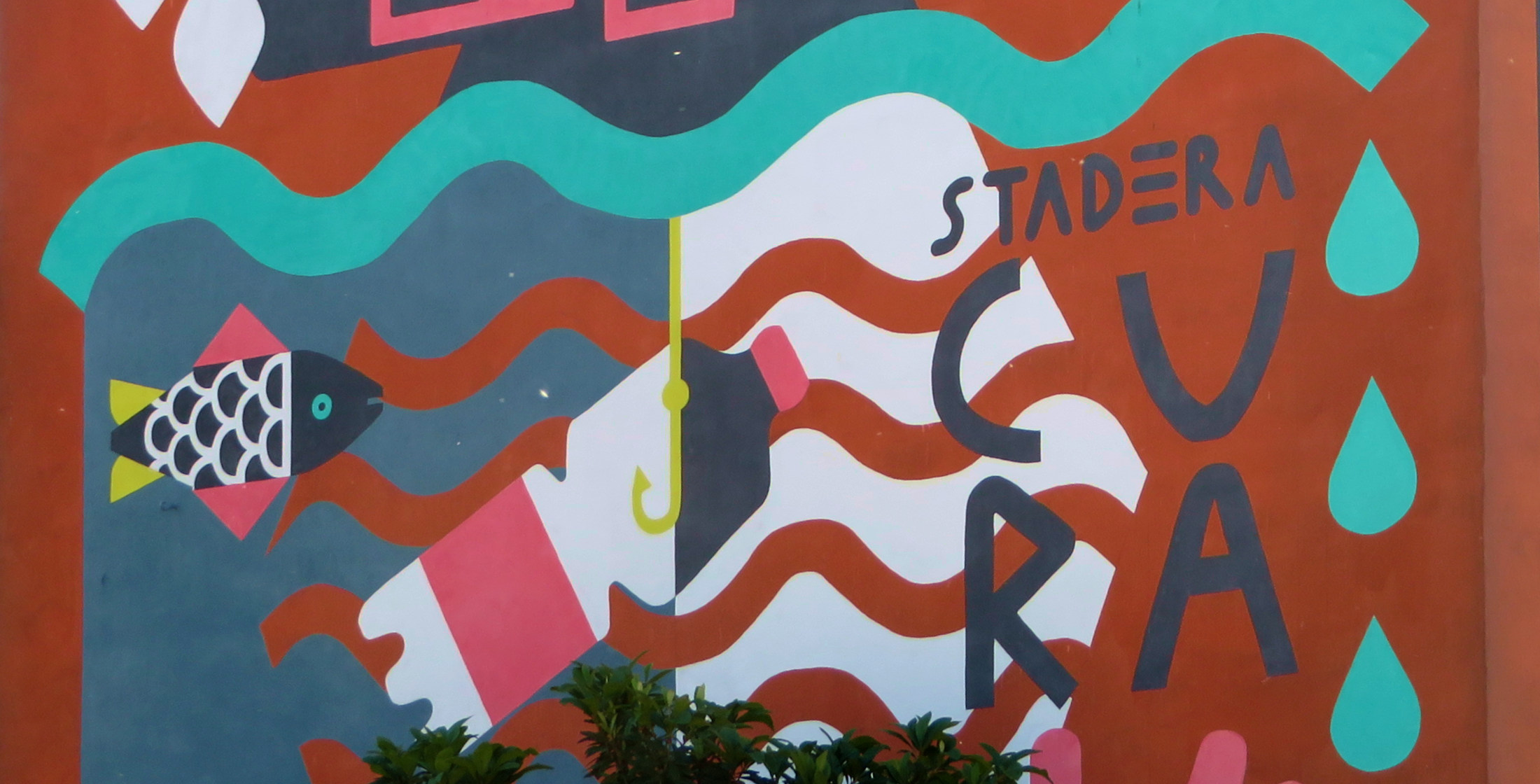
The name of the hosting neighborhood, Stadera, appears next to the word ‘cura,’ in a widely shared message that encourages everyone to take action in their daily lives; the message is also in Arabic.
The work is curated by Fantastudio, a creative hub based in the Stadera neighborhood, where the feminine universe and creativity meet, giving rise to new and stimulating projects, in collaboration with Worldrise, an NGO active for ten years in the protection and promotion of the marine environment. Dedicated to the Stadera neighborhood and created in close synergy with the inhabitants of the hosting street, the work embodies the concept of ‘care.’
The creation of the neighborhood mural is credited to A m’l rum da me, an artistic collective composed of Carlotta Moretti, Martina Ceccarelli, and Carolina Barbieri, established in Carrara as a graphic project, which today focuses on artistic projects, street art works, and illustrations.
In the words of the artists: “The theme of this work is the imaginary representation of the goddess Cura. This deity, for us, is a union of a Mermaid and Pachamama. The mermaid, by excellence, symbolizes the symbiosis of the human element, free from the constraints of civilization, and a regenerating nature.
Indeed, water is the element toward which profound and contrasting allegorical meanings can be found; it contains within itself life and death, birth and destruction.
Water is the element of origins, of becoming, the place where the miracle of life occurs and, consequently, where the superiority of the female element in the biological cycle is celebrated. Pachamama, which in the Quechua language means ‘Mother Earth’ or ‘Mother Universe,’ is the generous goddess of fertility and agriculture, a nurturing mother who gives life, but she can also show her cruel side to remind her children that they must always honor and respect her.
Pachamama brings us back to a type of immanent, pantheistic earth spirituality, where everything is sacred and divine, in contrast to the transcendent spirituality that dominates patriarchal cultures. From the union of these two symbolic figures arises our stylistic concept of the goddess Cura, humanity’s quintessential peculiarity.
Caring becomes not a complement to life but a part of every experience because it is its cause.
In the ancient world, Cura was semantically associated with anguish, understood as the movement of the soul toward something in the future.
A daily response that becomes the very structure of human action. To care means to have dealings: not just interest but participation. It promises communication, complicity, a shared sense; it is expressed not so much in an action as in a way of being involved, often tinged with anxiety or concern.
The land and the sea are our home, and therefore it is necessary to care for and respect them: this is the message we want to convey with this deity.”
The project was promoted by the Woolrich Outdoor Foundation.